Sitting in a taxi or waiting to collect the children, I often had time to move something forward. What I didn’t have was a PC. A laptop wasn’t practical in those moments, but my phone was already in my hand.
Meanwhile, AI was changing how I worked. More of the job was becoming a conversation: explaining an idea, reviewing what came back, correcting course. The need to sit at a desk was getting smaller. I wanted the tools to catch up.
So I started building Ripul, with a slightly stubborn ambition: I wanted to develop the app inside the app, from my phone.
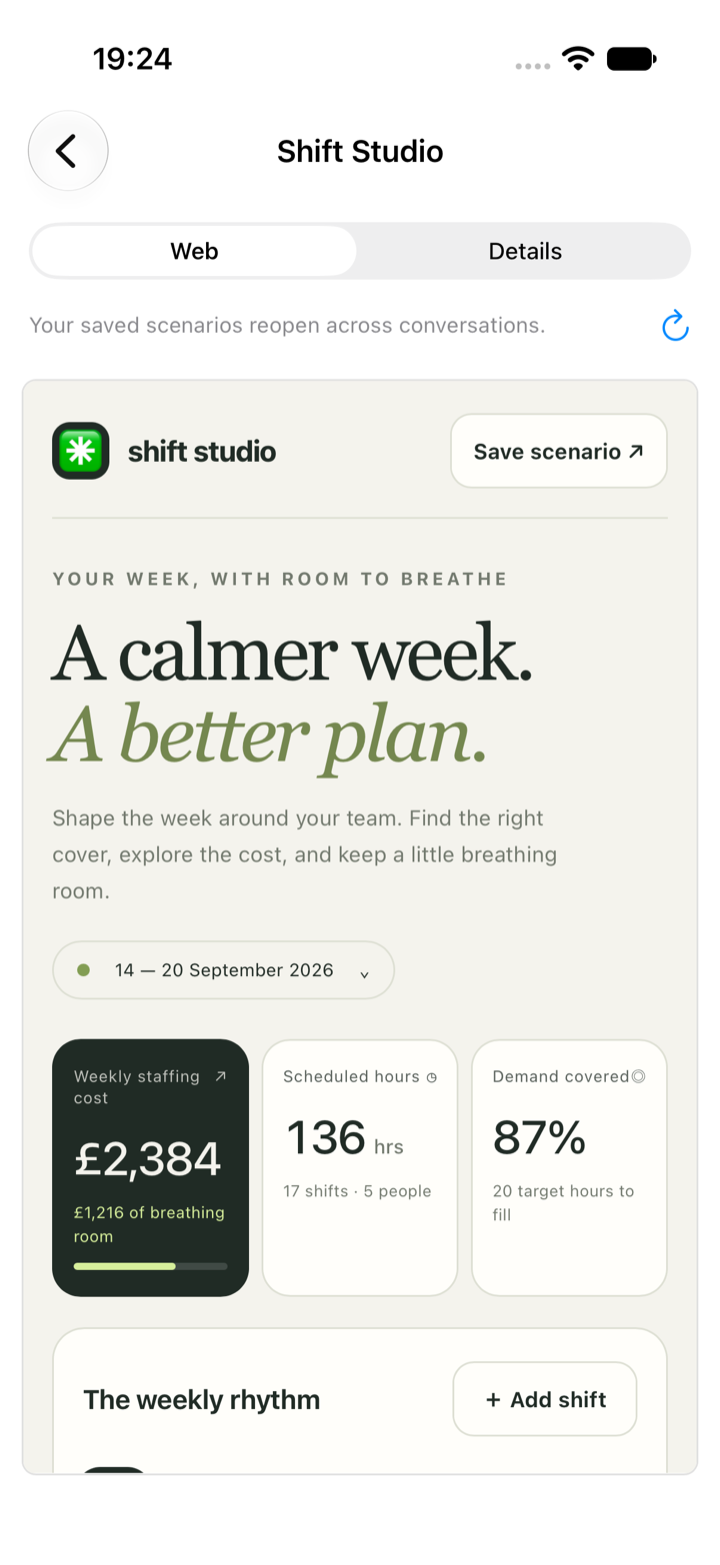
Every time I was dragged back to the desktop, I asked why. What had I needed to see, check or do? What did I need to fix so I could stay on the phone next time?
One of the biggest aha moments was getting a new version onto the phone. Xcode and TestFlight added friction to that loop. If the agent could build the app and deploy it straight to my phone over the air, I could install it and carry on working inside the version we’d just made.
The app could help build its own replacement. Then I could open that replacement and keep going.
That led to the next questions. When something broke, could the agent read the console logs itself? Could it drive the app, try the interaction and check its work? We built MCP tools for those things too. Each one removed another reason to go back to the desk — and another round of me copying an error or explaining what had happened on screen.
Along the way, we kept bouncing from Codex to Claude to Kimi, back to Claude, then back to Codex. It was exhausting.
But the more it happened, the more it felt like model hopping was a feature, not a bug. We wanted to use the latest models. We wanted a consistent interface and for every model to have access to the same artefacts and memories, so we could switch and carry on.
The model could change. The work should stay with us.
Then there was the team.
We were discussing bugs and ideas in Slack or WhatsApp, and I was relaying it all to the agent. Then bringing its questions back. Then carrying the answers over. I’d managed to free myself from the desk and given myself a job as a messenger.
I wanted my stakeholders in the same conversation as the agent. The person who spotted the problem could explain it. Someone else could add context. We could work through the change together, with the agent right there.
Ripul grew with each of those frustrations: getting the work onto my phone, giving the agent the tools to check it, making it easier to change models, and bringing the people involved into the conversation.
And now there’s an SDK, so you can bring those capabilities into your own apps. Give an agent access to what your app can do, and let your users work with it there.
I started by wanting to develop an app inside the app. That idea now reaches beyond Ripul.
Peter, founder of Ripul