One tool, two agents, two devices
Made on a phone with Claude. Finished on a Mac with Codex.
This is one real piece of work, recorded as it happened. Nothing was exported, copied or set up in between. The tool stayed with its owner, and the agents and devices changed around it.
On an iPhone Duo, with Claude
Ask for it
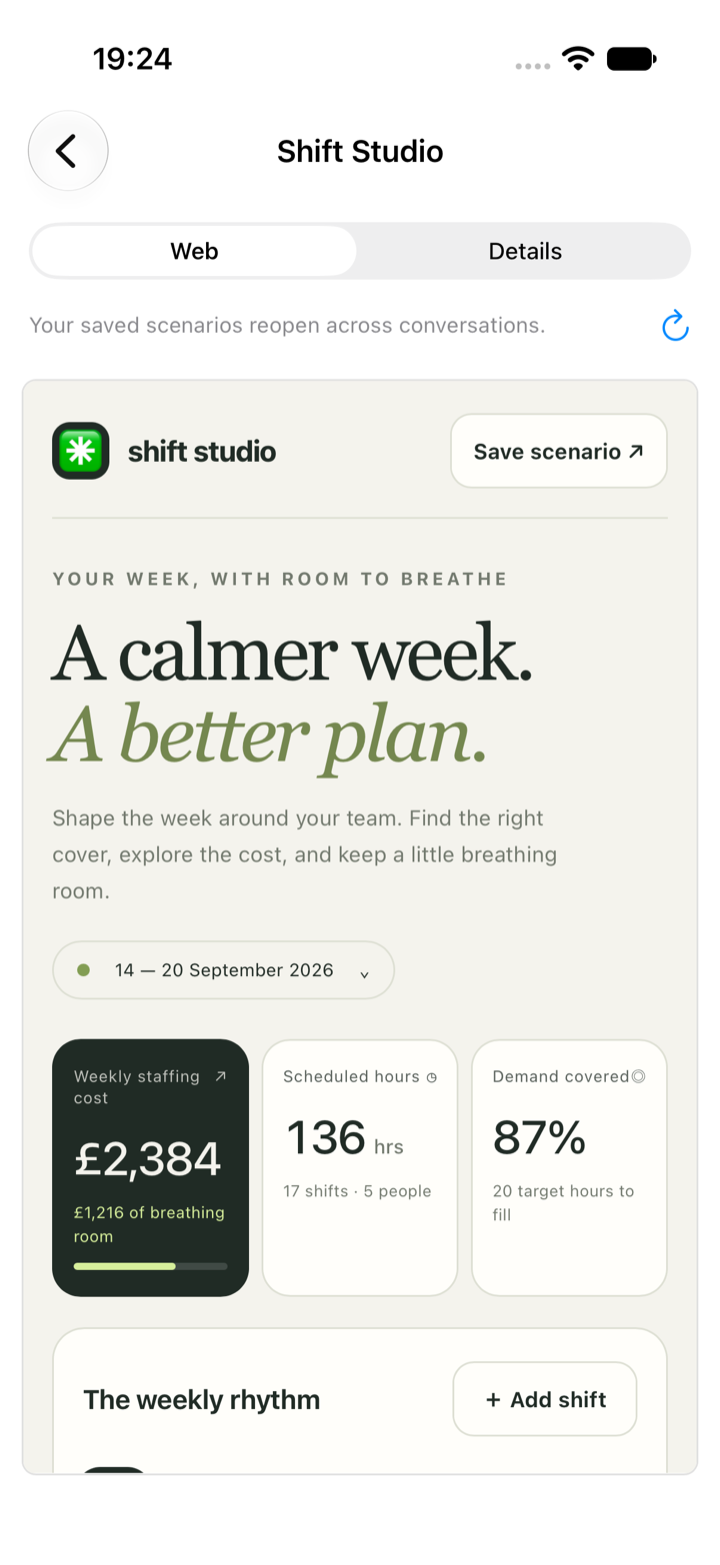
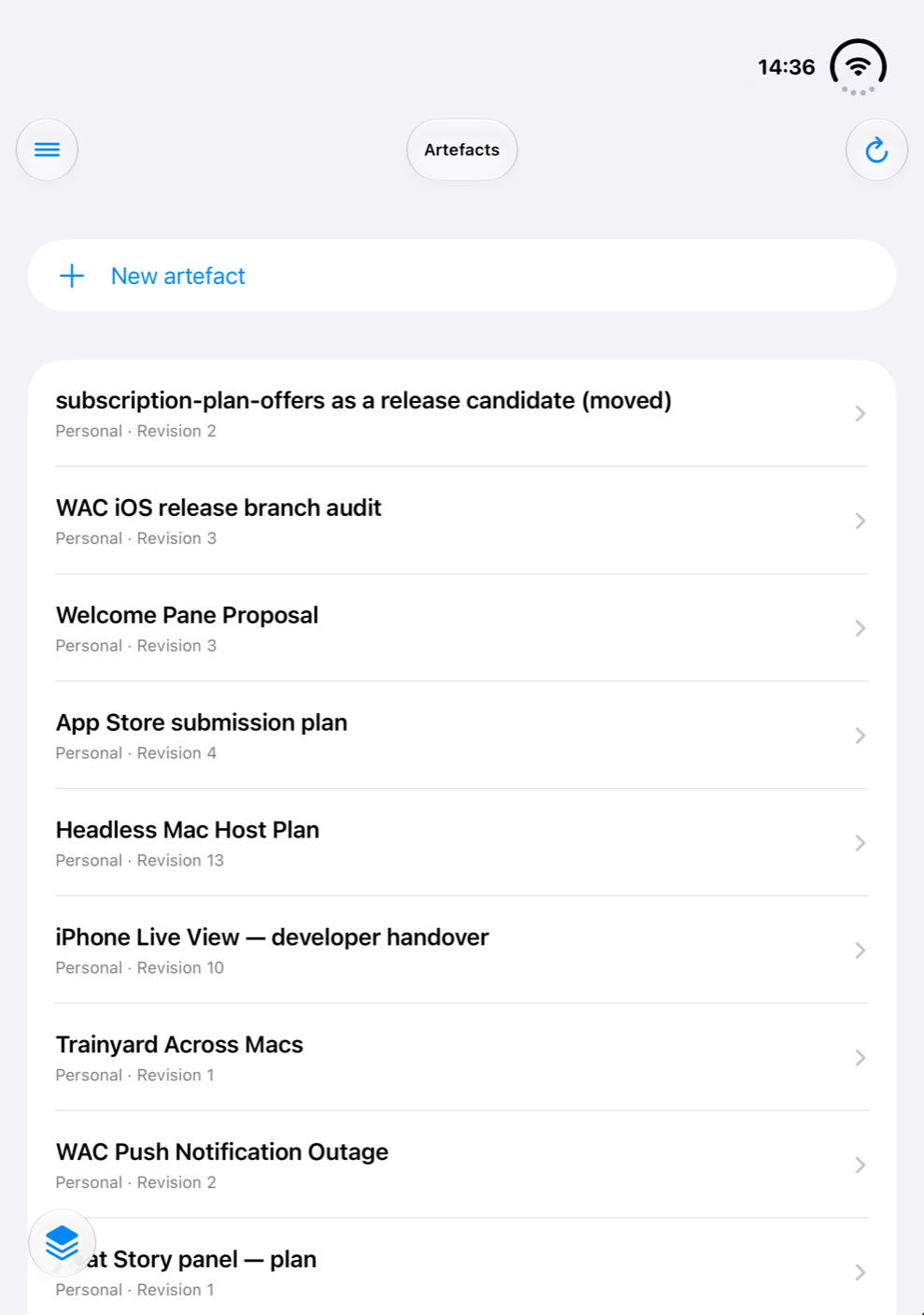
It starts as a sentence. On an iPhone Duo, Claude is asked for an extension that adds a search option to any YouTube video: look the video up, or search for the picture it shows. Claude builds it and saves it as an artefact. Watch the list on the left while it does: other agents are still at work, and their rows update live. One of them, “Terminal Chat Provider”, is building a new part of Ripul itself.
On a Mac, with Codex
Pick it up somewhere else, and put it right
Later, at a Mac, a new conversation is started with a different agent, and this time nothing is typed: the request is spoken. Codex is asked, out loud, whether it can see the extension. It can: the artefact belongs to the account, not to Claude. Claude's first version was not quite right: with Google, it did not offer both searches that were asked for, by the video's own ID and by the picture it shows. Codex is asked to put that right, and it changes the extension and tests it in the browser.
In Ripul's browser
Use it
Then it is simply there. Open YouTube in Ripul's browser, play a video, and the Search button sits beside Share, now offering both kinds of search with Google, as first asked. One press, and Google names the song from the picture on screen.
One agent got it nearly right. Another, from a different company, on a different device, finished the job. At no point did the work have to be moved. That is what “yours to keep” means.